【研究摘要】
Multi-Agent LLM Foundation for Psychiatric Diagnosis: Building a “Cognition–Emotion Synergy” AI Doctor Framework. As large language models are increasingly applied to psychiatric diagnosis, two critical limitations hinder real-world use: the lack of structured clinical reasoning pathways and insufficient affective interaction to sustain patient trust during multi-turn interviews. To address this scientific challenge, our team proposed a knowledge-guided multi-agent framework for psychiatric diagnosis, WiseMind, inspired by the Dialectical Behavior Therapy (DBT) theory of “Reasonable Mind” and “Emotional Mind.” The framework adopts a dual-agent collaborative architecture to decouple and coordinate clinical reasoning and empathic communication: the Reasonable Mind Agent conducts structured diagnostic reasoning following DSM-guided pathways, while the Emotional Mind Agent transforms diagnostic intent into empathetic, patient-facing interviewing language, thereby maintaining rigorous diagnostic logic while improving conversational rapport and perceived respect. The novelty lies in introducing a three-layer verification mechanism and, for the first time in psychiatry, adopting AISP as a new testing paradigm for diagnostic systems, establishing a scalable and stress-testable evaluation framework for LLM-based psychiatric diagnosis. Empirically, WiseMind achieved 85.6% first-order diagnostic accuracy across 1,206 simulated clinical dialogues and 180 real-user interactions, significantly outperforming single-agent LLM baselines, while also improving diagnostic node coverage, empathy ratings, and clinician professionalism scores. The structured knowledge-guided reasoning and multi-agent collaborative diagnostic architecture developed in this work provide essential technical foundations for the proposed project’s closed-loop validation system involving AI-doctor, AI-patient, and human expert clinicians. This work was published in npj Digital Medicine (SCI Q1, Top-tier medical journal, IF=15.1), providing strong methodological references for scalable and trustworthy conversational psychiatric diagnosis.
【核心发现】
2026年3月,复旦大学陈颉院士团队在Nature子刊npj Digital Medicine上发表题为“WiseMind: Recontextualizing AI with a Knowledge-Guided, Theory-Informed Multi-Agent Framework for Instrumental and Humanistic Benefits”的研究,首次提出一种知识引导、理论驱动的多智能体协同精神疾病鉴别诊断框架WiseMind。该框架受辩证行为疗法启发,通过“理性思维”与“情感思维”双智能体协作,系统性地解决了大语言模型在精神科诊断中难以兼顾结构化临床推理与共情性医患沟通的核心挑战,实现主动式专业精神疾病诊断,为精神科对话式诊断奠定基础。在1206例模拟临床对话和180例真实用户交互中,WiseMind达到85.6%的诊断准确率,显著优于单智能体基线,性能逼近人类精神科医生平均水平。
【研究亮点】
双智能体协同架构的设计与验证:受辩证行为疗法中“理性思维”与“情感思维”理论启发,团队构建了双智能体协作架构——“理性大脑”智能体遵循DSM-5诊断标准执行结构化临床推理,“情感心灵”智能体将诊断意图转化为富有共情力的患者导向语言。通过解耦医学推理与情感交互,这一设计实现了诊断准确性与治疗联盟建立的并行优化。
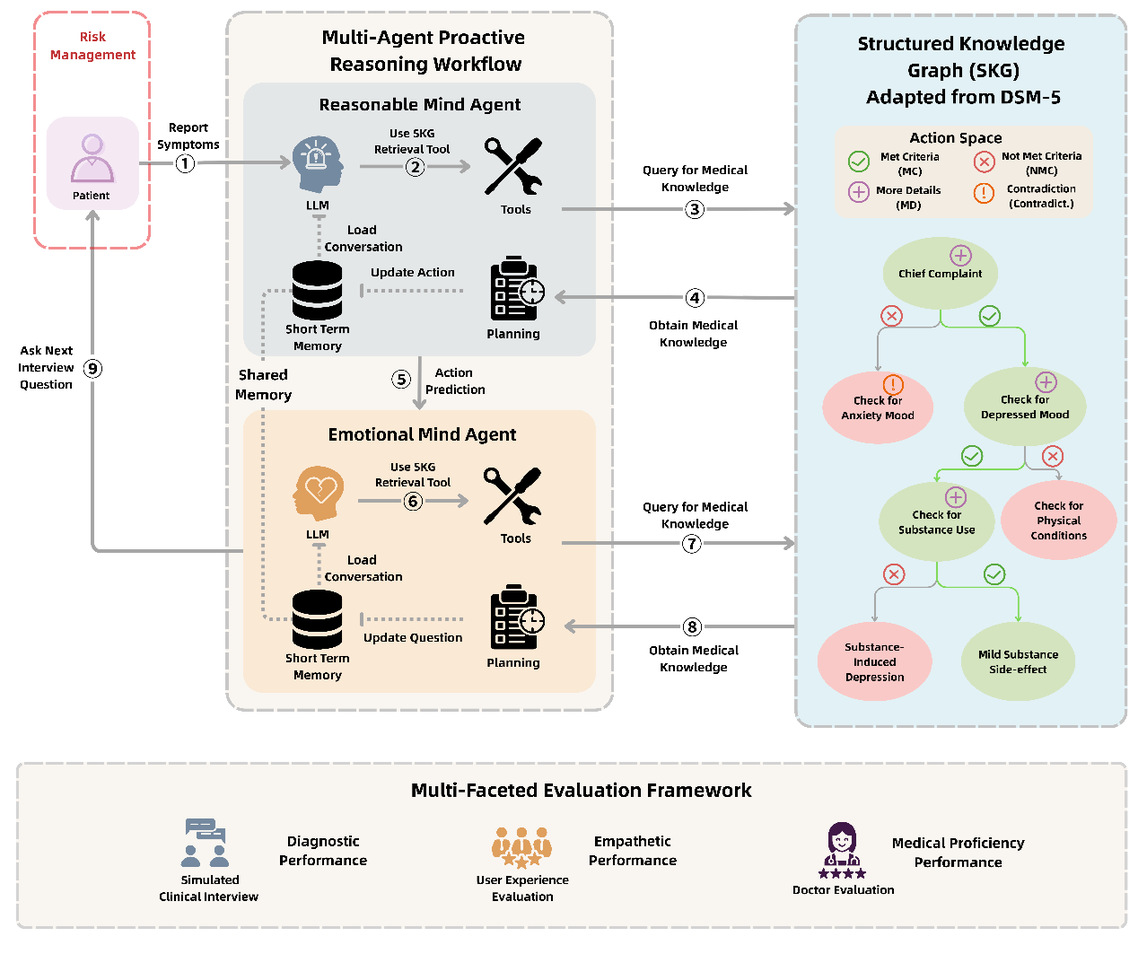
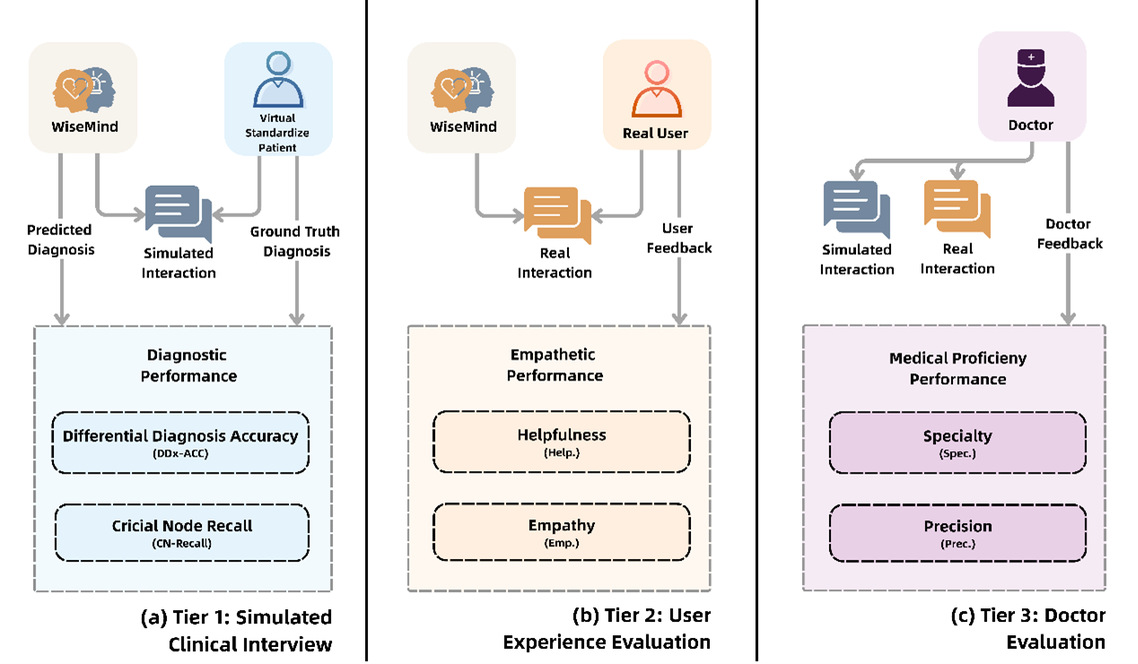
三层验证机制的建立与应用:团队构建了涵盖技术、人文与伦理的多层面评估体系——Tier 1模拟诊断基于虚拟标准病人评估鉴别诊断准确率与关键节点召回率;Tier 2用户体验通过真人交互测量系统的帮助性与共情度;Tier 3临床专家评审由执业精神科医生盲审评估专业度与精确度。团队创性地在系统效能验证中加入了基于AI标准化病人(AISP,AI Standardized Patient)的虚拟访谈测试。该验证方法摆脱传统对话式系统单纯依赖人类验证、周期长、成本大的瓶颈,为对话式AI系统验证提供新思路。
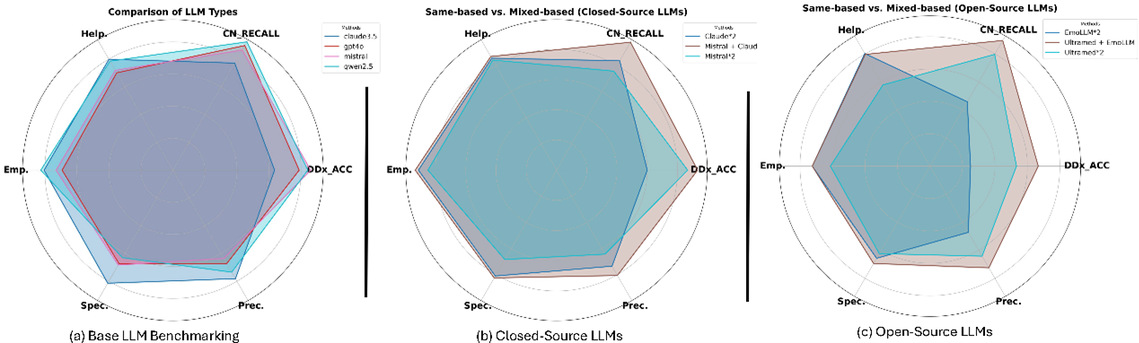
诊断性能逼近人类医生水平:在针对抑郁、双相、焦虑障碍的模拟鉴别诊断评估中(63类鉴别诊断),WiseMind的Top-1诊断准确率达到85.6%,显著优于各类单智能体基线(提升17-58个百分点),逼近人类精神科医生平均水平(86.0%)。关键节点召回率高达95.6%,证明其推理路径高度贴合临床标准。
【第一作者】
邬宇奇,复旦大学生物医学工程与技术创新学院博士后,上海/复旦超级博士后,上海市引才专项获得者。
【通讯作者】
陈颉,复旦大学生物医学工程与技术创新学院院长,IEEE Fellow,加拿大工程院院士,国家级人才,复旦大学浩清特聘教授,上海市特聘专家,上海优才揽蓄计划获得者。
个人主页:https://faet.fudan.edu.cn/c3/5c/c23902a639836/page.htm